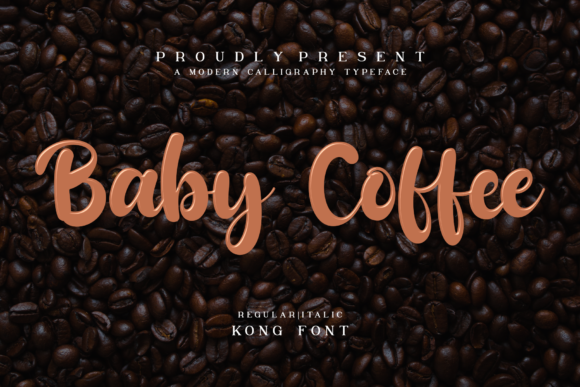
Baby Coffee: A Modern Script Font for Creative Projects
Finding the right typeface for a project often feels like a search for a missing piece. You have a concept, a color palette, and a message, but the lettering needs to tie it all together with the right emotion. This is where a font like Baby Coffee enters the conversation. It’s a modern and playful script font designed to inject personality and a human touch into digital and print work. Created by Kong Font Studio, this typeface isn't just a set of characters; it's a design asset with a specific, approachable character.
Understanding the Visual Personality of Baby Coffee
At its core, Baby Coffee is a script font, meaning its letters are connected in a flowing, cursive manner. However, it distinguishes itself from traditional, formal calligraphy. Its personality is decidedly modern and playful. The letterforms have a natural, handwritten quality, but they are clean and legible. You’ll notice a slight bounce and irregularity in the baseline, which is a hallmark of a handwritten font that aims for authenticity over rigid perfection. This subtle imperfection is what gives it warmth.
The strokes vary in weight, mimicking the pressure of a pen or brush tip, which adds dynamic energy. This isn't a delicate, whisper-thin script. It has a confident presence that remains friendly and accessible. The overall appeal lies in this balance: it feels personal and crafted, yet it’s polished enough for professional applications. For designers and creators, this means it can convey approachability and creativity without sacrificing clarity. It’s a creative font that serves as a bridge between casual handwriting and structured modern typography.
Where Baby Coffee Truly Shines: Practical Applications
The versatility of a font like Baby Coffee is its greatest strength. It’s not a serif font for long-form body text, nor is it a stark sans serif font for technical manuals. Instead, it excels as a display font—a typeface used for headlines, logos, and short bursts of text where personality is paramount. Let’s explore where it finds its best use.
Branding and Logo Design
For logo design, especially for businesses targeting a younger, creative, or family-oriented audience, Baby Coffee can be an excellent choice. Think of a boutique coffee shop (the name is quite fitting), a handmade jewelry brand, a children’s clothing line, or a lifestyle blog. The font immediately communicates a sense of warmth, craft, and personal care. It helps build a brand identity that feels human and relatable. However, a key consideration is readability at small sizes. A logo needs to work on a website header and a tiny social media icon. Always test the font’s legibility when scaled down before finalizing a logo mark.
Digital and Social Media Content
In the fast-paced world of social media graphics, standing out is everything. Baby Coffee is perfect for creating engaging Instagram stories, quote graphics, Pinterest pins, and YouTube thumbnails. Its playful script catches the eye in a feed dominated by clean sans serifs. It works wonderfully for overlaying on photographs, adding a personal, editorial touch. For web design, use it sparingly but effectively—perhaps for a homepage hero statement, a special announcement, or a call-to-action button where you want to draw the user’s focus with a unique typeface.
Publishing and Editorial Design
Within editorial design, this font can elevate a magazine layout, a book cover, or a blog post graphic. Imagine it used for a chapter title in a cookbook or a pull quote in a lifestyle magazine. It adds a layer of visual interest and breaks the monotony of standard body text. For bloggers and content creators, using Baby Coffee for section headers or featured image titles can significantly enhance the perceived quality and professionalism of their content, aiding in audience engagement.
Packaging and Physical Products
Packaging design is another arena where a premium font like Baby Coffee proves its value. It’s ideal for product labels, thank-you cards, stickers, and promotional materials for small businesses. The handwritten feel translates beautifully to physical print, reinforcing the idea of a small-batch, artisanal product. Crafters and hobbyists can use it for personal projects like wedding invitations, party decorations, or custom apparel, where a personal touch is the entire point.
Working with Baby Coffee: A Designer’s Practical Guide
Adopting a new font into your workflow requires more than just liking how it looks. Here’s how to approach Baby Coffee effectively.
Evaluate the Project Fit. Before you download, ask: Does this font’s personality match my project’s goals? Baby Coffee is friendly and creative. It may not suit a law firm’s annual report or a financial tech startup’s primary interface. It’s built for projects that value warmth and creativity over corporate formality.
Master Font Pairing. A script font rarely works well alone for all text. The art of font pairing is crucial. Baby Coffee pairs beautifully with a simple, clean sans serif font for body text. Think of fonts like Lato, Open Sans, or Montserrat. The contrast creates a clear visual hierarchy: the script for headlines and key phrases, the sans serif for readable paragraphs. Avoid pairing it with another ornate or decorative font, which can create visual chaos.
Review Included Styles and Licensing. When you acquire a commercial font, check what’s included. Does it have multiple weights (light, regular, bold)? Does it include alternate characters, ligatures, or swashes that can add variety? Also, understand the licensing. Kong Font Studio’s license will specify if it’s for personal use, commercial use, or both. For any business application, ensuring you have the proper commercial license is non-negotiable to avoid legal issues.
Test for Readability and Hierarchy. Always test the font in context. Set a headline, then set a sub-headline, and see how they work together. Check the kerning (space between letters) and leading (space between lines). While Baby Coffee is designed for legibility, complex scripts can become hard to read if letters are too cramped or lines are too close. Use it for emphasis, not for lengthy sentences where a standard serif or sans serif would be more comfortable for the reader’s eyes.
In the end, a font is a tool for communication. Baby Coffee is a specialized, expressive tool. It’s not for every job, but for the right project—whether it’s crafting a brand identity, designing social media graphics, or creating beautiful packaging