Jack Hammer: A Playful Script Font for Creative Branding
In the crowded world of typography, finding a font that feels both personal and professional can be a challenge. Jack Hammer, a modern and playful handwritten script font, strikes that balance beautifully. Created by the talented team at Kong Font Studio, this typeface is designed for those who want to inject personality and warmth into their projects without sacrificing clarity or versatility. It’s more than just a collection of letters; it’s a tool for storytelling and connection.
Understanding the Visual Character of Jack Hammer
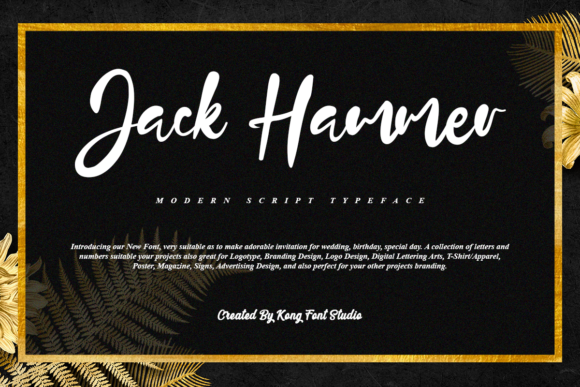
At its core, Jack Hammer is a script font that mimics the fluid, organic motion of natural handwriting. Its letters are connected in a flowing cursive style, but with a distinctly modern twist. The strokes are confident and slightly varied, giving the text a dynamic, hand-crafted feel that avoids looking overly rigid or mechanical. This handwritten font personality makes it feel approachable and genuine, perfect for brands and creators who want to establish a human touch.
Unlike formal calligraphy or overly casual brush scripts, Jack Hammer sits in a sweet spot. It’s playful without being childish, and stylish without being pretentious. The letterforms have a gentle bounce and subtle irregularities that add character, making it an excellent creative font for projects that need to stand out from the crowd. Its overall appeal lies in its ability to feel both contemporary and timeless, a rare quality that gives it broad utility across many design contexts.
Where Jack Hammer Truly Shines: Practical Applications
The true value of a premium font like Jack Hammer is measured by its performance in real-world projects. Its versatility makes it a valuable addition to any designer's toolkit, especially for those working in branding, marketing, and creative production.
For logo design and brand identity, Jack Hammer is a standout choice. It can form the centerpiece of a wordmark or work beautifully as a complementary element alongside a simpler serif font or sans serif font. Imagine it on a coffee shop logo, a boutique clothing tag, or the masthead of a personal blog. It instantly communicates creativity, authenticity, and a hands-on ethos. This makes it particularly powerful for small businesses, artisans, and entrepreneurs who want their brand to feel personal and curated.
In packaging design, the font’s personality helps products jump off the shelf. It’s perfect for artisan food labels, cosmetics branding, or any product where a handmade, artisanal quality is a key selling point. The flowing script can highlight product names or special features, creating a focal point that draws the consumer’s eye and communicates value through design.
For digital creators and marketers, Jack Hammer excels in creating engaging social media graphics. Its handwritten style breaks through the visual noise of static feeds, adding a personal touch to quotes, announcements, and promotional posts. It can also be used effectively in web design for website headers, hero text, or calls-to-action, provided it’s paired thoughtfully with a highly readable body font. Similarly, for editorial design in magazines or books, it can add flair to pull quotes, chapter titles, or section headers, enhancing the reader’s experience without overwhelming the main content.
Beyond commercial use, Jack Hammer is a fantastic design asset for personal projects. Crafters can use it for custom invitations, greeting cards, or DIY printables. Hobbyists will find it invaluable for creating personalized gifts, scrapbook elements, or motivational art prints. Its charm lies in its ability to make any text feel special and intentional.
Using Jack Hammer Effectively: A Designer’s Guide
Choosing the right font is only half the battle; using it correctly is what separates good design from great design. Here’s how to get the most out of Jack Hammer in your projects.
First, always consider readability. While Jack Hammer is clear for a script font, its primary role is as a display font. This means it’s best suited for headlines, titles, logos, and short bursts of text where impact matters more than scanning ease. Avoid using it for long paragraphs or small body copy in web design or printed materials, as the connected letters can become difficult to read at length. A good rule of thumb is to use it for text that will be viewed at a larger size or for a brief moment of emphasis.
Next, master the art of font pairing. To create effective visual hierarchy and ensure overall readability, pair Jack Hammer with a clean, neutral companion. A simple, geometric sans serif font like Montserrat or Open Sans creates a beautiful contrast, letting the script shine while keeping supporting text crisp. Alternatively, a classic, sturdy serif font like Lora or Merriweather can ground the playful script with a sense of tradition and formality. The key is to let Jack Hammer be the star of the show while the supporting cast ensures clarity.
Before finalizing a design, take time to explore the font’s full potential. Check if the font package includes alternate characters, ligatures, or stylistic sets. These features can add variety and a more authentic handwritten feel, allowing you to customize the look and avoid repetitive letterforms. Always test the font in your specific context—view it on different devices for digital projects or print a sample for physical materials. This helps you evaluate how its visual hierarchy and personality hold up in real use.
Finally, understand the licensing. Since Jack Hammer is a commercial font, ensure you have the appropriate license for your intended use, whether it’s for a client’s brand, merchandise for sale, or a digital product. Respecting the creator’s work by using properly licensed design assets is a fundamental part of professional practice and supports the ecosystem that brings us such high-quality tools.
In the end, a typeface like Jack Hammer is more than just a font—it’s a catalyst for creativity. By understanding its strengths and applying it thoughtfully, you can elevate your modern typography projects, build a more engaging brand identity, and connect with your audience on a more human level. It’s a testament to how the right choice of typeface can transform a simple message into a memorable experience.