Lemongrass: A Playful Handwritten Script for Creative Projects
Finding a typeface that feels both authentic and versatile is a common challenge for designers and creators. You want something with personality, but not so much that it overwhelms a project. Lemongrass is a modern handwritten script font that strikes that balance beautifully. It’s a premium font designed by Kong Font Studio that brings a fresh, organic energy to any layout. Think of it as the design equivalent of a handwritten note—personal, warm, and full of character. It’s not just another script; it’s a tool for adding a human touch to digital and print media.
More Than Just Swirly Letters: The Visual Character of Lemongrass
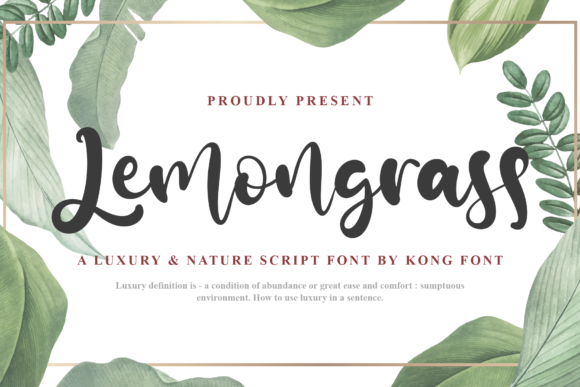
At its core, Lemongrass is a display font, meaning it’s crafted to make an impact at larger sizes. Its visual style is a blend of casual elegance and modern playfulness. The letterforms have a natural, flowing rhythm, mimicking the slight inconsistencies of real handwriting. You’ll notice smooth connections between letters, which helps maintain a sense of cohesion even in a loose script. The baseline isn’t rigidly straight, adding to its organic, handcrafted feel. This isn’t a formal calligraphic script; it’s more relaxed and approachable.
The personality of this typeface is decidedly friendly and creative. It avoids the overly ornate flourishes that can date a font, opting instead for a cleaner, more contemporary look. This makes it incredibly adaptable. It can feel whimsical for a children’s brand, sophisticated for a boutique logo, or inviting for social media graphics. The weight is typically medium, offering good presence without feeling heavy. When you use Lemongrass, you’re not just selecting letters; you’re injecting a specific mood—one of creativity, warmth, and approachability—into your work.
Where Lemongrass Truly Shines: Practical Applications
Understanding a font’s ideal use cases is key to using it effectively. Lemongrass excels in projects where you want to convey a personal, artisanal, or creative brand identity. It’s a fantastic choice for logo design, particularly for businesses in lifestyle, wellness, food, craft, or boutique retail. Imagine it for a local bakery’s logo, a yoga studio’s branding, or an independent florist’s signage. It immediately communicates a hands-on, quality-focused ethos.
Beyond logos, its applications are vast:
- Packaging Design: For artisanal products like handmade soaps, gourmet sauces, or organic teas, Lemongrass can make labels feel special and authentic.
- Editorial Design: Use it for pull quotes, chapter headings, or feature titles in magazines and blogs to add a personal editorial voice.
- Web Design & Social Media: It works wonderfully for website headers, promotional banners, and social media graphics, especially for Instagram stories, Pinterest pins, and Facebook ads where a personal touch drives engagement.
- Marketing Materials: From business cards and letterheads to email newsletters and digital ads, it helps create a consistent and memorable brand identity.
- Crafting & Personal Projects: For hobbyists using tools like Silhouette Design Studio, it’s perfect for creating custom invitations, greeting cards, vinyl decals, and scrapbooking elements.
Using Lemongrass Effectively: A Designer’s Perspective
A creative font like this requires thoughtful implementation. Its biggest strength—its distinctive personality—can become a weakness if overused. As a script font, it’s generally best suited for headlines, short phrases, and accents rather than long paragraphs of body copy, where readability can suffer.
Font Pairing is Crucial. To create a balanced and professional visual hierarchy, pair Lemongrass with a clean, neutral typeface. A simple sans serif font for body text or a classic serif font for a more traditional feel can provide excellent contrast. For example, using Lemongrass for a main heading and a font like Open Sans or Lora for the supporting text creates a clear, engaging layout. This pairing ensures the playful script gets attention without sacrificing the readability of the core message.
Evaluate the Project’s Tone. Ask yourself: does the playful, handwritten style match the brand’s voice? For a corporate law firm, probably not. For a wedding planner or a indie bookstore, it’s a perfect fit. Always consider the context and audience.
Test for Readability. Always view your design at the intended size. A script font that looks stunning in a logo mockup might become illegible when scaled down for a small product tag. Test it on different backgrounds and ensure there’s sufficient contrast.
Review the Included Styles. Check what comes with your license. Does it include alternate characters, ligatures, or multiple weights? These extras can add valuable versatility, allowing you to customize the look and avoid repetitive letter shapes in longer words.
Understand the Licensing. If you’re using Lemongrass for commercial projects—a client’s logo, a product you sell, or marketing materials—you need to ensure you have the proper commercial license. Kong Font Studio provides this through platforms like Creative Fabrica. Respecting font licensing is a fundamental part of professional practice and supports the designers who create these valuable design assets.
In the landscape of modern typography, a well-crafted handwritten font like Lemongrass is a powerful asset. It bridges the gap between digital precision and human warmth. Used strategically, it can elevate a brand’s perception, create emotional connections with an audience, and make your designs stand out with authentic, creative flair. It’s a reminder that sometimes, the most effective communication feels genuinely personal.