Milkshakehoney: Where Modern Elegance Meets Handwritten Charm
Finding a font that feels both professionally polished and genuinely personal can be a real challenge for designers and brand builders. You want clarity and structure, but you also need warmth and personality. This is the exact balance struck by the Milkshake Honey font duo. It’s not just a single typeface; it’s a carefully crafted system designed to bring a harmonious yet dynamic voice to your projects. Think of it as having a versatile creative partner that understands both the need for clean hierarchy and the desire for authentic expression.
The Anatomy of a Harmonious Duo
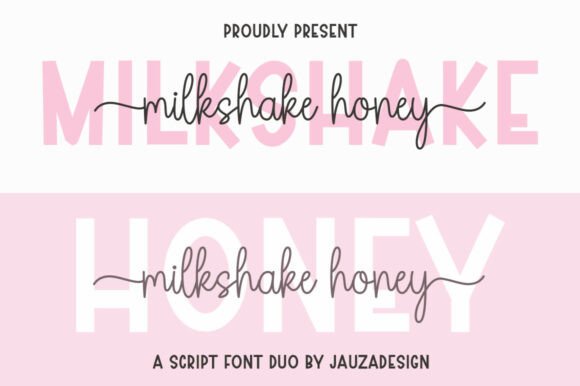
At its core, the Milkshakehoney font is a study in elegant contrast. The first half of the duo is a tall, clean all-caps sans serif. This is your anchor. Its lines are minimal and impactful, providing a strong, readable foundation that’s perfect for headlines, logos, and any text where clarity is paramount. It has a modern, slightly geometric feel that lends an air of sophistication without feeling cold or overly rigid.
The second component is a flowing, modern script font. This is where the warmth and personality come in. The script is fluid and romantic, with a natural, handwritten quality that feels personal and inviting. It’s designed to complement the sans serif, not compete with it. The two typefaces work in tandem: the sans serif provides structure, and the script adds organic charm and emotional resonance. This powerful font pairing is built-in, saving you the guesswork of trying to match different typefaces from different families.
Where This Font Duo Truly Shines
The versatility of Milkshake Honey is one of its greatest strengths. Its balanced personality makes it suitable for a wide range of applications across both digital and print mediums. For brand identity projects, it’s a standout choice. Imagine using the clean sans serif for your primary logo mark and the script for a tagline or sub-brand. This creates immediate visual interest and a brand that feels both established and approachable.
In packaging design, particularly for feminine, artisanal, or nature-inspired products, the font duo excels. The script can highlight product names or special ingredients with a handcrafted touch, while the sans serif handles the necessary details like volume and descriptions with crisp legibility. For wedding stationery, the romantic script is a natural fit for invitations and place cards, while the sans serif provides a clean, modern counterpoint for details and directions.
Digital creators will find it equally useful. The display font qualities of the sans serif make it perfect for bold website headers and impactful social media graphics. Meanwhile, the script can be used for pull quotes, call-to-action phrases, or to add a personal signature to blog graphics and Instagram stories. It’s a creative font that helps digital content stand out in a crowded feed, fostering better audience engagement through its visual appeal.
Practical Guidance for Using Milkshake Honey
When you choose a premium font like Milkshake Honey, you’re investing in a design asset. To get the most from it, consider a few practical points. First, evaluate your project’s core message. Is your brand voice warm, personal, and elegant? Then this duo is likely a strong fit. If your project demands a purely corporate, technical, or gritty aesthetic, you might need to look elsewhere.
Next, think about hierarchy and readability. The all-caps sans serif is excellent for short, high-impact text like headlines and logos. However, setting entire paragraphs in all caps can hinder readability for body copy. Use the sans serif strategically for emphasis and structure. The script font, being a flowing handwritten font, is best used for shorter accent text—quotes, names, single words, or logos. It’s not designed for long-form reading, but it excels at adding a focal point of elegance.
A major advantage of this commercial font is that it is PUA encoded. This technical detail is a huge practical benefit for users of all skill levels. It means every single glyph, swash, and ligature included with the font is easily accessible through your character map or font panel, even in basic design software. You don’t need advanced typographic knowledge to access all the beautiful alternate characters that give the script its dynamic, custom feel.
Finally, always test the font in context. Mock up your designs before finalizing. See how the font pairing works on a business card versus a website header. Check the contrast on a printed brochure and a mobile screen. By viewing the typeface in real-world scenarios, you can ensure it supports your visual storytelling effectively, enhancing readability and solidifying a professional, memorable brand perception.