Starfall: The Modern Handwritten Font That Brings Designs to Life
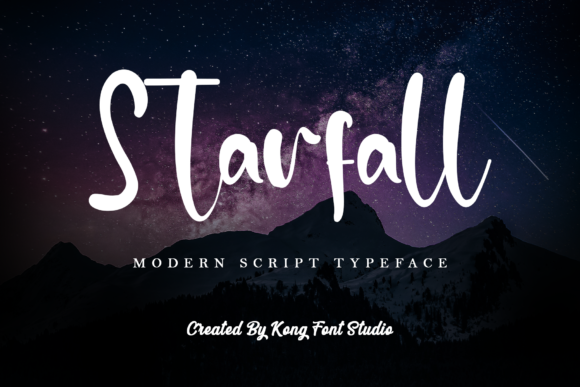
There's a moment in every creative project when you realize the typography isn't quite right. The words are there, the layout is solid, but something feels flat—like the design is speaking in a monotone voice when it should be having a real conversation. That's where a font like Starfall enters the picture. Created by Kong Font Studio, this modern handwritten script font has a personality that's hard to ignore: playful, confident, and unmistakably human.
Starfall isn't trying to be everything to everyone, and that's precisely what makes it useful. It sits in a specific lane—a contemporary script with just enough informality to feel approachable, but enough structure to hold its own in professional contexts. The letterforms carry a natural flow, with subtle variations in stroke weight that mimic the rhythm of actual handwriting. There's energy in the way the characters connect, a sense of movement that static, geometric fonts simply can't replicate.
Where Starfall Actually Works (And Where It Doesn't)
Let's be practical. A handwritten font like Starfall isn't the right choice for body text on a corporate annual report. Nobody wants to squint through 300 words of cursive. But that's not what it's built for. Starfall shines as a display font—the kind of typeface you use for headlines, logos, packaging callouts, social media quotes, and event invitations where you want to inject warmth and personality without sacrificing legibility.
For crafters, this font is a natural fit. Think about greeting cards, scrapbook layouts, personalized gifts, and handmade product labels. The script font style adds that handcrafted feel that customers associate with care and attention to detail. If you're selling on Etsy or running a small handmade business, using Starfall on your packaging or product photos can help communicate that artisan quality before anyone reads a single word of your product description.
Designers working on branding projects will find Starfall useful for specific applications within a broader font pairing strategy. It pairs well with clean sans serif fonts for contrast—imagine Starfall on a wedding invitation headline with a simple geometric sans serif handling the details below. It also works alongside serif fonts when you want a more eclectic, editorial look. The key is letting Starfall do the expressive work while a more neutral typeface handles the heavy lifting of readability.
In packaging design, particularly for lifestyle brands, food products, beauty items, and boutique goods, Starfall can communicate authenticity. There's a reason so many craft breweries, artisan bakeries, and indie cosmetics brands gravitate toward handwritten fonts—they signal that a real person is behind the product, not a faceless corporation. Starfall delivers that signal with a modern typography sensibility that avoids looking dated or overly rustic.
How a Single Font Choice Shapes Brand Perception
Typography does more than display words. It sets expectations. When someone sees Starfall on a restaurant menu, they're already forming impressions about the dining experience before they read a single dish name. The font says: this place is relaxed, creative, probably a little fun. That's the power of choosing the right typeface—it works as a silent ambassador for your brand identity.
For entrepreneurs and small business owners, this matters more than most people realize. Your font choices appear on your website, your social media graphics, your business cards, your invoices, your email signatures. When those choices are consistent and intentional, they build recognition. When they're scattered—Comic Sans on one platform, a stiff corporate font on another—potential customers get confused about who you actually are. Starfall can anchor the expressive, human side of your visual identity, while a complementary sans serif font keeps things grounded.
Marketers and content creators working in digital spaces should pay attention to how Starfall performs at different sizes. At larger display sizes—think Instagram story headers, YouTube thumbnails, website hero sections—it looks fantastic. The letterforms have room to breathe, and the personality comes through clearly. At smaller sizes, particularly on mobile screens, some of the connecting strokes may lose definition. This isn't a flaw; it's the nature of script fonts. Smart designers test their work at actual viewing sizes before committing.
Getting the Most Out of Starfall in Real Projects
Before you download and start using any premium font, it's worth spending a few minutes evaluating fit. Ask yourself: does this font's personality match my project's tone? A playful handwritten script works beautifully for a children's birthday party flyer but might undermine a law firm's credibility. Context always wins.
When you're testing Starfall, try setting a few different phrases—your business name, a tagline, a call to action. Look at the letter spacing, the way certain character combinations interact. Every creative font has quirks: maybe the lowercase "r" connects differently than you expect, or the uppercase letters have a flourish that works in some contexts but not others. These aren't problems to fix. They're characteristics to understand and use intentionally.
For web design and digital projects, consider using Starfall selectively. A single headline or pull quote in a handwritten script can break up visual monotony and draw the eye exactly where you want it. Overuse dilutes the effect and can make a page feel cluttered. The same principle applies to social media graphics—one striking use of Starfall in a feed of otherwise clean typography creates a memorable moment.
Publishers and bloggers might use Starfall for chapter titles, section headers, or featured quote callouts within an editorial layout. In editorial design, mixing a handwritten script with a readable body font creates visual hierarchy that guides readers through content naturally. The script signals "this is important" or "this is personal," while the body font does the quiet work of delivering information.
Licensing matters. Starfall is a commercial font, which means you need to understand what your license covers. If you're using it for client work, make sure the license permits that use. If you're incorporating it into products you sell—like templates, printed goods, or digital downloads—verify the terms. This isn't exciting, but it protects both you and the font creator. Kong Font Studio has made Starfall available through Creative Fabrica, where licensing details are clearly outlined.
One practical recommendation: build a small reference sheet when you adopt Starfall into your toolkit. Note which sizes it works best at, which pairings you prefer, and which contexts suit it. Over time, this becomes a personal style guide that speeds up your workflow and keeps your output consistent. That consistency is what separates amateur design from professional work—not the fonts themselves, but how intentionally you use them.
Finding the Right Balance Between Expression and Function
Every font exists on a spectrum between expression and function. Highly expressive fonts—like Starfall—carry strong emotional signals but demand more careful deployment. Highly functional fonts—think Helvetica or Inter—disappear into the background, letting content take center stage. Great design happens when you know which tool fits which moment.
Starfall is a design asset worth having in your collection if your work involves any of the following: branding for lifestyle or creative businesses, event materials, social media content, product packaging, personal projects, or any context where warmth and personality matter. It won't replace your body text font, and it shouldn't. But for the moments when you need typography that feels genuinely human—imperfect in the best way, energetic without being chaotic—Starfall delivers.
The best font choices aren't about following trends or picking the newest release. They're about matching the tool to the task, understanding what a typeface communicates, and using it with enough intention that the result feels cohesive. Starfall, used thoughtfully, can elevate a design from competent to memorable. And in a world where everyone is competing for attention, memorable is exactly where you want to be.