Taraka Font: A Playful Script for Creative Projects
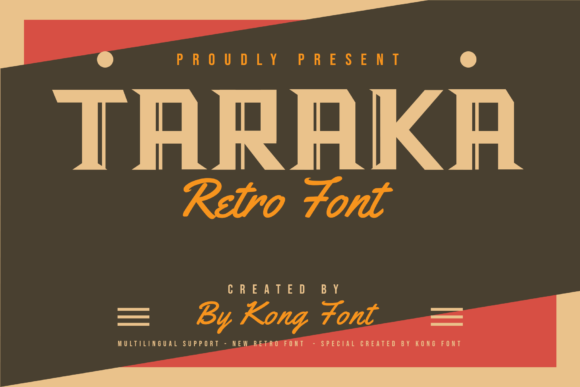
If you've ever sifted through a library of premium fonts looking for something that balances character with legibility, you know the struggle. You need a typeface with personality, but not one that sacrifices function for flair. Enter Taraka, a retro and playful handwritten script font that has become a favorite among crafters and designers alike. Created by the team at Kong Font Studio, this font brings a warm, approachable energy to a wide range of creative projects.
The Visual Personality of Taraka
At first glance, Taraka feels familiar and inviting. It’s a handwritten font, but it’s not the loose, messy kind you might use for a quick note. The letterforms have a consistent baseline and a natural, flowing rhythm that evokes the charm of mid-century signage or a well-loved greeting card. The strokes have a slight, pleasant irregularity that gives it an authentic, human touch. It’s playful without being childish, and retro without feeling outdated. This balance is what makes Taraka a versatile creative font. It can look whimsical on a birthday invitation and sophisticated on a boutique label, depending on the context and color palette you choose.
Unlike a stiff sans serif font or a formal serif font, Taraka injects immediate warmth. It’s the kind of display font that draws the eye in headings, logos, and short bursts of text. Think of it as the friendly voice in your design toolkit—ideal for when you want to make a personal connection with your audience.
Where Taraka Shines: Practical Applications
The true test of any design asset is how it performs in the real world. Taraka’s strength lies in its adaptability across different mediums and projects. For crafters using tools like Silhouette Design Studio, it’s a fantastic choice for vinyl decals, t-shirt designs, and personalized home décor. Its clean, continuous lines often translate well to cutting machines, reducing the need for excessive weeding.
In the realm of brand identity, Taraka can be a secret weapon. Imagine a small-batch candle company or a local bakery. Using Taraka for their logo and product packaging immediately communicates handmade quality and care. It helps build a brand perception that is authentic and artisanal. For digital design, it works beautifully for website banners, call-to-action buttons, and social media graphics where you need to stop the scroll with a friendly, approachable message.
For publishers and content creators, Taraka excels in editorial design for pull quotes, chapter titles, or magazine headers. It breaks up the monotony of body text set in a traditional sans serif or serif font, creating a stronger visual hierarchy and guiding the reader’s eye. The key is to use it strategically—it’s not for long paragraphs, but for impactful moments.
Pairing and Professional Use: Making Taraka Work for You
A great font doesn’t work in isolation. Effective font pairing is crucial. Taraka, as a script font, pairs best with something clean and simple. A sturdy, geometric sans serif font like Montserrat or Open Sans for body text provides excellent contrast and ensures overall readability. This pairing creates a clear hierarchy: Taraka captures attention, and the supporting font delivers the information clearly.
When evaluating Taraka for a commercial project, always check the licensing. Fonts on platforms like Creative Fabrica often come with licenses that cover a wide range of uses, from personal crafts to commercial products and even print-on-demand services. Understanding these terms is part of professional design practice and protects your work.
Before committing, test Taraka in your specific design software, whether it’s Photoshop, Illustrator, or a crafting program. Set your headlines and see how the letter spacing (tracking) and line height (leading) feel. Does it maintain its charm at the size you need? Does it still feel legible on a mobile screen if you’re designing for web design? This hands-on evaluation is more valuable than any description.
Ultimately, Taraka is more than just another handwritten font. It’s a tool for adding a layer of human connection to your designs. It’s about choosing a typeface that reflects a brand’s personality—be it playful, nostalgic, or warmly sophisticated. When used thoughtfully, it doesn’t just decorate; it communicates. It helps tell a story, making it a valuable addition to any designer’s or crafter’s collection of modern typography resources.